.png)
The most successful nonprofit fundraisers know that converting casual attendees into annual donors takes strategic, intentional follow-up. But simply flooding new supporters with donation requests isn’t the way to do it. The real task is to build a genuine relationship and guide attendees on that journey, one step at a time. So instead of spamming first-time attendees with constant asks, engage supporters weeks before the event and stay in touch long after it wraps.
Here are five strategies for moving casual event attendees toward committed, year-round donors, from the first ask to the twelfth month of the relationship.
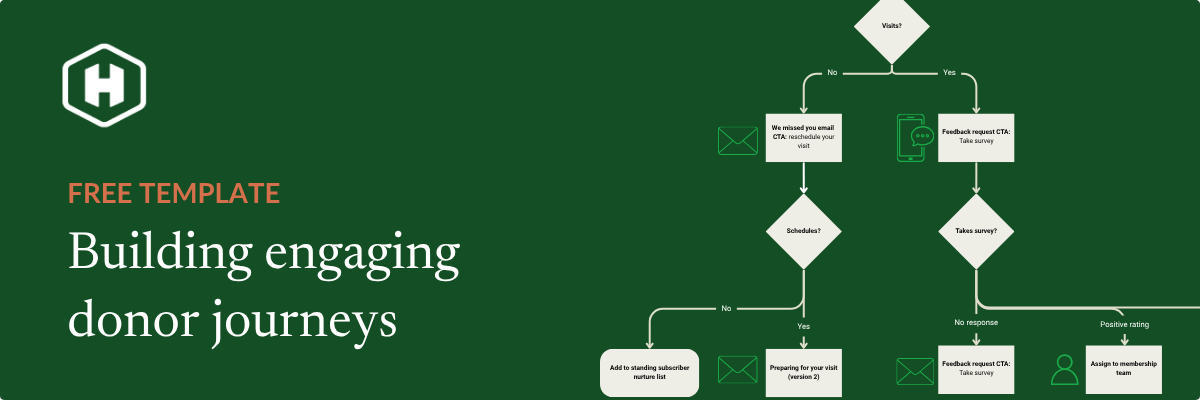
1. Map the Supporter Journey
A casual ticket buyer and a committed annual donor aren’t fundamentally different types of people. They’re simply at two different points on the same path. And before you can move someone along the path from attendee to donor, you need to know what that path actually looks like.
Think of the path as a ladder: event attendance, digital engagement (newsletter signup or a social follow), then a two-way conversation, then a repeatable annual gift. For most nonprofits, the first rung is a golf tournament, gala, walk, or other larger-scale event. Keep these best practices in mind as you move up the ladder:
- Don’t rush a first-time attendee into a major gift conversation. Don’t ask too much, too early. Frame the goal as a series of small, comfortable steps rather than one big leap.
- Match calls to action to the moment. The touchpoint should be proportionate to the ask. For example, at checkout, that means low-barrier options like a one-time donation add-on or a simple round-up feature.
- Treat event day as a touchpoint. Event day isn’t the finish line; it might be touchpoint three of a twelve-month campaign.
Once the journey is mapped, take a hard look at your checkout flow. Swap pushy recurring-gift asks for easier options like round-ups to start building momentum from day one.
2. Deepen the Cause Connection During the Event
Casual attendees often show up to a fundraising event for the social experience first and the mission second. The event is your best opportunity to close that gap in person. Here’s how:
- Tell a story with your data: Pair impact metrics with photos and real testimonials to weave a narrative instead of leading with numbers alone.
- Place mission-focused signage at high-traffic spots: Share information about your cause on signs near registration, the practice green, or the bar, including a QR code linking to your donation page.
- Bring beneficiaries into the room: Hearing firsthand from program beneficiaries, scholarship recipients, or frontline staff creates a memorable connection to how their dollars are being used.
- Send cause-connected thank yous: Send a thank-you note with event prizes or keepsakes that explicitly tie the item back to your mission.
Great event day engagement depends on what you capture while it’s happening. Train staff and volunteers to flag standout attendee interactions in real time so you have specifics to draw on once the personalized follow-up phase begins.
3. Build a Seamless Post-Event Data Pipeline
A great event only pays off in the long term if the data it generates actually reaches the right people. This is where many otherwise strong events can quietly lose momentum.
- Centralize registration data. Use dedicated event technology to capture player, donor, and sponsor details in one place so the information isn’t scattered across spreadsheets.
- Export data to your CRM within one or two weeks. It’s crucial to get new contacts into your year-round stewardship pipeline while the event is still fresh.
- Segment new contacts by behavior, not just demographics. A casual ticket buyer and a repeat corporate sponsor shouldn’t get the same follow-up email. Segment contacts so follow-up communication is personal, not generic.
None of this works if the underlying data is messy. Keep your data clean by standardizing your registration fields up front to catch missing emails and duplicate profiles before they become problems, so your post-event campaigns actually reach the people they’re meant for.
4. Prove Their Return on Investment (ROI) Immediately
Donors give again when they can clearly see what their last gift accomplished. The faster you can show that, the more likely a casual attendee is to come back.
- Show, don't just tell. Send a dedicated wrap-up communication within a week of the event, including final fundraising total, photos, and short impact stories.
- Offer a low-barrier next step that isn’t an ask. The goal is to keep the momentum going without immediately asking for another donation. Invite casual attendees to a facility tour, volunteer day, or simply an invitation to subscribe to your newsletter.
- Close the loop on auctions, raffles, and games. Follow up promptly with auction winners and raffle participants to arrange delivery, say thanks, and add them to next year's priority invite list.
A great way to hit that one-week window is to not start from scratch. Draft your thank-you email and impact assets before the event starts so you can send them within 48 hours, while post-event goodwill and energy are still high.
5. Nurture the Relationship All Year Long
This is where you actually convert a casual ticket buyer into an annual donor. Everything up to this point just earns you the right to an ongoing relationship, but here is where that relationship gets built.
- Skip the constant pitch. Share valuable, non-promotional content throughout the year instead of only reaching out when it’s time to ask for money.
- Offer free, low-commitment touchpoints. Educational digital resources like webinars or impact-focused newsletters keep your organization top of mind without an attached transactional ask.
- Position your organization as a trusted resource. Once you’ve earned buy-in and positioned yourself as a trusted advisor that consistently delivers value, the annual gift ask becomes a natural next step—not a cold request.
A useful rule of thumb is a 3:1 ratio in your stewardship calendar. For every three purely value-driven touchpoints (impact updates, field stories, free event invites), follow with one soft ask. This balance keeps donor trust intact.
Bringing It All Together
Turning casual ticket buyers into annual donors is more complex than finding the one perfect ask. Building a connected system—a mapped journey, a memorable event, clean data, fast proof of impact, and steady attention year-round—is what jumpstarts those conversions.
Nonprofits that treat their fundraising event as the start of a relationship, not the end of a transaction, are the ones that turn one-day guests into long-term mission supporters.