
Year-end is the most important fundraising season of the year for most nonprofits; donors are generous, tax deadlines create urgency, and the cultural moment of giving is on your side. In 2025, 36.1% of annual nonprofit revenue was raised in Q4, with December alone accounting for roughly 18% of all giving. For fundraisers who want to take full advantage of this short window of opportunity, advance preparation is critical.
Here are five steps to take today, so you and your team can focus on connecting with donors instead of putting out fires in December.
Step 1: Clean your mailing list before it goes to the mailing house
Your direct mail appeal is only as good as the list behind it. Sending to outdated addresses and duplicate records wastes budget and can damage donor relationships , so before your list goes to the mail house, set aside dedicated time to:
- Run an NCOA (National Change of Address) update if your CRM does not do this automatically
- Check for and merge duplicate records
- Confirm that deceased constituents and any "Do Not Mail" preferences are properly suppressed
- Review your lapsed donor segment and decide intentionally whether to include them
- Check that address data is formatted correctly, consistently, and completely
Mail houses have submission deadlines, and those do not move. Build list prep into your project timeline with enough buffer to catch errors before it is too late to fix them.
Step 2: Build your email strategy and get your segments ready
Email is one of your highest-ROI tools, and especially during year-end, it rewards preparation. Going in with a clear strategy will boost your chances of standing out in crowded inboxes and securing those valuable opens and clicks.
Map out your full email calendar before the season starts. Think through:
- How many touches you are planning between Giving Tuesday and December 31
- What the arc of your messaging looks like (gratitude, impact, urgency, final push)
- Which segments get which versions: lapsed donors, first-time donors, major donors, recurring givers
- Whether any audiences should be suppressed from certain sends
Then build and QA your segments before you need them - test your filters and confirm that your merge fields are pulling correctly to ensure that your outreach is as personalized as possible. The more of this work you do in advance, the more confidently you can execute when the pace picks up in December.
Step 3: Decide what role giving tuesday will play for your organization
In 2024, Giving Tuesday raised $3.6 billion in the United States alone, a 16% increase from 2023, with 36.1 million people participating. The event is increasingly popular, but its value for your specific organization depends on your data and your donors. Start by looking at your own data from previous years. Did Giving Tuesday generate new donors, or prompt gifts from people who wouldn't typically have given? Did it bring in meaningful revenue relative to the effort it required?
From there, you have a few options depending on what the data tells you:
If Giving Tuesday works well for your organization, double down. Set a specific goal, communicate it clearly, and build urgency around it. Matching gift opportunities and peer-to-peer fundraising can both amplify the day significantly.
If the results have been underwhelming, you do not have to opt out entirely. A simple organic social post and an email to your list acknowledges the day without overextending your team.
If you are not sure, this is the year to track it carefully so you have data to make the call next time.
Whatever you decide, make the decision intentionally rather than defaulting to what you did last year. Regardless of the level of effort you put in, GivingTuesday is a great opportunity to kick off the energy of your year-end campaign.
Step 4: Plan your office coverage during holiday downtime
When a supporter calls to make a gift or ask a question during the holidays and can't reach anyone, you miss an opportunity for connection and sometimes a donation. Of course, the solution is not to ask your team to sacrifice their holidays. Instead, plan coverage intentionally and communicate clearly. Determine which days your office will be closed or reduced, and then:
- Create a rotating on-call schedule so at least one person is reachable for urgent donor needs each day
- Set up an out-of-office response that gives donors clear guidance on when they will hear back and how to reach someone if needed
- Make sure donation processing is set up to run smoothly without active management
- Brief whoever is on call on anything time-sensitive happening that week
A little coordination goes a long way - your donors get the responsiveness they expect, and your team gets to actually enjoy the season.
Step 5: Prepare your acknowledgements and stewardship touchpoints in advance
Year-end acknowledgement and stewardship is one of the highest-leverage moments in the fundraising calendar. The donors you thank well in December are the ones most likely to give again in the new year, so don't put off planning here.
In the current giving environment, stewardship matters more than ever, and "what we've always done" may no longer cut it. Think beyond the standard thank-you letter and consider:
- A handwritten note or personal call to your top donors and long-time supporters
- A year-in-review message that shows donors the concrete impact of their giving
- A thoughtful acknowledgement of a donor milestone: a giving anniversary, a tribute gift, or their first year as a donor
- Early outreach to lapsed donors who renewed this year
Draft your acknowledgement templates early and get them approved before December hits. If your team plans to make thank-you calls, schedule those as actual calendar blocks so they happen rather than getting pushed to the bottom of the list. The year-end rush can feel transactional, but the organizations that stand out are the ones that stay relational.
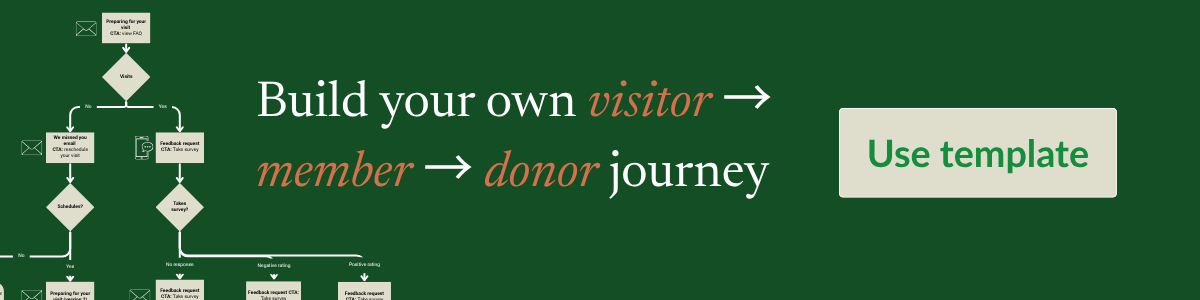
Want to really stand out to your donors? Plan intentional stewardship journeys, for post-year-end and beyond. Download our interactive template for an easy starting place.
Frequently Asked Questions: Year-End Fundraising Campaigns
How much of nonprofit revenue comes from year-end giving? According to the Blackbaud Institute's 2025 Trends in Giving report, 36.1% of annual nonprofit revenue arrives in Q4, with December alone accounting for roughly 18% of all giving. The final three days of the year often represent a significant spike, as donors rush to meet tax-year deadlines.
When should nonprofits start preparing for a year-end fundraising campaign? Most nonprofit fundraising professionals recommend beginning year-end campaign preparation by September or October at the latest. Key preparation tasks, including mailing list cleaning, email segment building, and acknowledgement template drafting, all take longer than expected and have hard downstream deadlines (such as mailing house submission dates) that do not move.
What makes a year-end nonprofit fundraising campaign successful? The most important factor in a successful year-end fundraising campaign is preparation: clean donor data, pre-built email segments, a clear Giving Tuesday strategy, planned holiday coverage, and stewardship touchpoints drafted before December. Organizations that do this preparation work in advance are able to focus on donor relationships during the season rather than operational firefighting.
Should my nonprofit participate in Giving Tuesday? Whether to invest in Giving Tuesday depends on your organization's own historical data. Look at whether previous Giving Tuesday campaigns generated new donors or simply pulled forward gifts from existing donors, and compare the revenue to the staff effort required. If the day has worked well, double down with a specific goal and matching gift opportunity. If results have been weak, a lighter-touch acknowledgement (one email and an organic social post) lets you participate without overextending your team.
How do you improve donor retention after a year-end campaign? Donor retention after a year-end campaign improves most when stewardship happens quickly and personally. Thank donors within 48 hours, personalize acknowledgements based on giving history, and send a year-in-review impact update in January. The Fundraising Effectiveness Project found donor retention declined for the fourth consecutive year in 2024, with the number of donors falling 5.3% year over year, making timely, personal follow-up more important than ever.
What donor data do you need for a year-end fundraising campaign? An effective year-end campaign requires: a clean, deduplicated mailing list with current addresses; email segments built around giving history (lapsed, first-time, major donors, recurring givers); complete records of donor preferences and suppression flags (Do Not Mail, deceased); and a consolidated view of each supporter's full engagement history so acknowledgements can be personalized. Organizations without a unified view of their supporter data often spend the season reconciling records instead of communicating with donors.