
Many nonprofit boards have some version of a give/get policy. The concept is simple: every board member is expected to contribute financially to the organization, either through their own personal gift, by raising money from others, or some combination of both. According to BoardSource's 2023 Leading with Intent survey, 78.7% of nonprofits expect all board members to make a personal monetary contribution, but the ubiquity of this practice doesn't indicate its success. Nearly 45% of the chief executives surveyed gave their board a D or F grade for fundraising performance, and 77% said that their board does not spend enough time on fundraising.
If you are new to fundraising or just inherited a chaotic spreadsheet titled something like "Board Giving 2024 FINAL v3," this guide is for you. I'll walk through how to think about building a board giving tracking process from scratch: what questions to ask and answer before you set anything up, what data you actually need, and how to structure things so your system stays useful all year long, not just at the end of your fiscal year when everyone is panicking.
Start with policy, not spreadsheets
The most common mistake most organizations make is jumping straight to building a tracker before they fully understand what they are tracking. Before you set up any system, sit down with your Executive Director or board chair and get clear answers to these questions:
- What is the give/get expectation for each board member? Is it a flat amount (e.g., every member gives or raises $5,000), or does it vary by member or committee?
- Is there a distinction between the give portion and the get portion? Some organizations count only cash gifts; others include in-kind donations, event ticket purchases, or sponsorships secured.
- What counts as a "get"? Does it only include cash gifts from the board member's personal contacts, or does it also count event revenue they generated, grants they introduced, or corporate matches?
- When does the cycle start and end? Is it tied to the fiscal year, the calendar year, or the board's term schedule?
- What happens when a board member joins mid-year? Do they have a prorated obligation, or does the full amount apply?
These answers will determine everything about how you structure your tracking system. If you do not have them before you build, you will spend the rest of the year retrofitting.
Pro tip: Document the policy in writing and share it with your entire fundraising team and every board member at the start of the cycle. Ambiguity about what counts toward a give/get is one of the most common sources of conflict between staff and board.
Decide on your unit of tracking
Once you understand the policy, you need to decide how granular your tracking will be. There are two main approaches:
Track at the board member level. One record per person per cycle, with a single combined give/get goal. This is simpler to set up and easier to report on, but it means you are not separately tracking how much of the goal came from personal giving versus fundraising.
Track give and get separately. Two records per person, or a single record with fields for each component. This gives you more visibility but adds complexity, both in setup and in ongoing data entry.
For most small-to-midsize organizations, tracking at the board member level with notes distinguishing give versus get activity is the right balance. You get a clear picture of overall progress without overcomplicating your data model. If your board is large or your policy is especially detailed, separate tracking may be worth it.
Map out your stages
Think about your board giving cycle as a pipeline with distinct stages that each board member moves through. Most organizations have something like the following, even if they have never named it that way:
- Orientation. New board members, or returning members at the start of a new cycle, need to be informed of their obligation. This stage represents the period before any formal commitment has been confirmed.
- Commitment confirmed. The board member has acknowledged their give/get goal for the cycle, either verbally or in writing. This is an important milestone to capture because it is easy to assume a commitment exists when it has never actually been confirmed.
- Active solicitation. The board member is making asks on behalf of the organization. This stage is often invisible to database staff because it happens in board members' personal networks, but it is worth tracking — even informally — so you know who is actively engaged versus who has gone quiet.
- Fulfilled. The board member has met their full obligation for the cycle. Move them here when the numbers confirm it.
- Declined or inactive. The board member did not meet their obligation, resigned, or otherwise did not participate in the cycle. Keep a record rather than deleting it (this history matters for board development conversations).
Your database system may use different terminology, but the key is to make sure every board member has a clearly defined current status at any point in the year, not just at year-end.
Determine the data that you need to capture
Here is a practical list of the data points that make board giving tracking genuinely useful:
- Ask amount / obligation. The total give/get goal for this board member this cycle.
- Projected amount. Your best estimate of what they will actually deliver, which may differ from the stated obligation, especially early in the cycle.
- Actual amount. The sum of verified gifts received. This should update automatically as gifts come in if your system is set up correctly.
- A record of every gift. Both personal gifts from the board member and gifts they brought in from others. Note who the donor was when it is not the board member themselves.
- A record of every outreach attempt. Calls, emails, meetings, and asks - logged with dates and notes. This protects you when a board member later claims they were never followed up with.
- Stage / status. Where the board member is in the cycle right now.
- Assigned staff owner. Who on your team is responsible for managing the relationship and following up.
- Cycle or fiscal year. So you can compare year over year without old data polluting current reports.
You probably do not need more than this. Resist the urge to add fields for every possible nuance; the more complex your data entry requirements, the less consistently they get filled in. A tracking system only works if people actually use it. Simpler and consistently used beats sophisticated and abandoned.
Build the habit, not just the system
The most well-designed tracking system in the world will not help you if it only gets updated twice a year. Board giving tracking needs to become a regular part of your workflow, not a year-end scramble. When fundraising progress isn't visible between board meetings, it doesn't stay front of mind. The habits below are designed to fix that.
A few practices that help:
- Update records after every touchpoint. If someone on your team has a conversation with a board member about their giving, it goes in the system that day, not "when I get a chance."
- Run a board giving report at every staff fundraising meeting. Even a quick five-minute review of where each board member stands keeps it front of mind and catches problems before they become end-of-year surprises.
- Send board members a mid-year update on their own progress. Most board members appreciate knowing where they stand. A simple email - "You've fulfilled $2,500 of your $5,000 commitment, here's what we have on file" - is both a courtesy and a gentle nudge. When progress is invisible, it's easy for a well-intentioned board member to let the obligation quietly slip to the back of their mind.
- Close the cycle intentionally. At year-end, update every record to its final status before you roll over to the new cycle. Do not let ambiguous records carry forward.
A note on starting over mid-year
If you are reading this in the middle of a giving cycle with no tracking system in place, start by reconstructing what you can from email records, donation reports, and conversations with your ED. Enter the data you have, make your best estimate of current status for each board member, and commit to capturing everything going forward. An imperfect record that improves over time is far more useful than waiting until next year to start fresh.
The goal is not a perfect database. The goal is visibility - knowing, at any point in the year, which board members are on track, which ones need a follow-up, and whether your board as a whole is going to hit its collective target. When you have that, the board giving conversation stops being an awkward end-of-year reckoning and starts being a normal, ongoing part of how you manage your organization's fundraising.
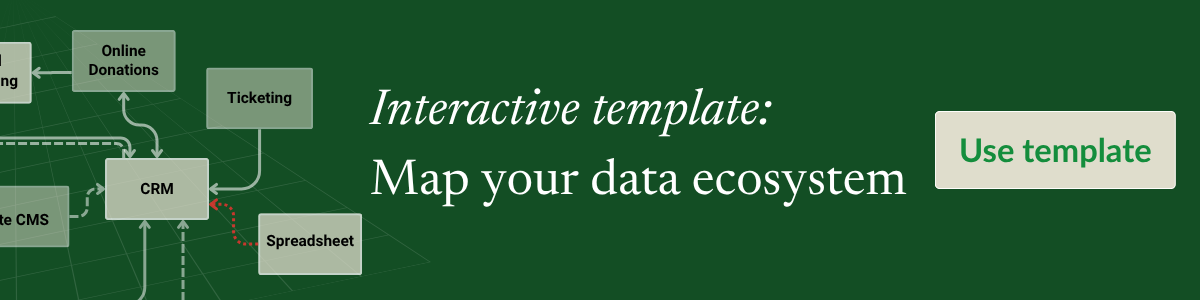
Effectively tracking and attributing your fundraising revenue starts with understanding your data. Start with our free data mapping template to get a clearer picture of your organization's data ecosystem. Download the template →