
At the organization, skilled fundraisers were working hard - segmenting lists, writing compelling appeals, and staying in regular contact with their donors. But all of that effort was undermined by a simple data error. In 2025, donor counts fell an estimated 3.6%, extending a streak of annual declines. Many forces shape those numbers, most of which fundraisers don’t have any control over.
In our recent webinar, Stewardship horror stories: what bad records cost you (and how to fix it), Humanitru's Christine Robertson and Lasserina Dowell of FundMiner shared the data mistakes they have seen cost organizations donor trust, and how to prevent each one. Both presenters made one point clear: the villain is almost never your team. People are doing their best with the systems and processes they have, and bad data is a problem to solve together.
Donors want evidence that their giving matters. In Independent Sector's 2023 Trust in Civil Society survey of 3,000 U.S. adults, 80% said they need to see proof of an organization's impact before they continue their support. The best way to show donors that their next gift will make a difference is to show them that their first gift did. Every touchpoint matters, but when records are inaccurate, even careful, well-meant outreach can undermine the trust you are trying to build.
Mistake 1: Mishandling sensitive information
One of the first stories shared by the webinar presenters was about an organization that had developed a habit of storing credit card numbers in their CRM’s phone number field. Without any encryption, those credit card numbers were unprotected and could have been included in reports or exports that were never meant to contain payment information.
This is just one fairly jarring example of a larger category. Free-text notes and catch-all fields have a way of collecting bank details, ID numbers, or private details about someone's health or family, usually because a staff member wanted to remember something helpful. Each of those is a small decision that becomes a risk once the record is exported, shared, or breached.
Donors notice this. In the BBB Wise Giving Alliance's 2025 Give.org Donor Trust Special Report, 80% of surveyed donors said they would stop or reduce their giving to a charity that appeared in the news for being hacked and having data stolen. Data protection ranked third among the accountability factors donors weigh, behind only how a charity spends its money and whether its appeals are truthful. Protecting donor data doesn’t stop with buying secure software, it also requires organizations to make sure that their tools are being used correctly.
What to do about it. Start with refreshing your team’s training on data handling best practices and your organization’s standard operating procedures. Ensure that not only do they understand how to handle data, but why certain processes and precautions are important to keeping data secure.
Mistake 2: Leaving a donor's correction unfixed
Let’s go back to the name change story. What our presenter described was death by a thousand cuts. Small cracks in a relationship rarely look serious on their own, but they add up over time, and eventually donors reach their limit.
What to do about it. Define a step-by-step process for how to handle a correction or update from a donor, including who is responsible for overseeing the process, what tools need to be updated (since a fix in one system may not translate to all of them), and what timeline it is expected to happen on. Make sure that the owner of the process follows up on each step to ensure completion, and closes it out when it is done. As our presenters said, even our best efforts will sometimes miss things, but hearing donors when they tell us makes a big difference.
Mistake 3: Small data entry errors undermine impact reporting
One presenter previously worked as a frontline fundraiser, and shared a story about a couple who carefully read every message they were sent. When they received a statement on the impact of a recent gift, they were confused because it didn’t reflect the fact that their gift had qualified for a match. They had given with the expectation that the impact of their gift would be doubled, but that wasn’t reflected in the report they received.
The donors were gracious, and the mistake was easy to explain. But for years afterward, the team spent extra time triple-checking the reports that were sent to ensure that trust was rebuilt.
The error still hung over their work and the donor relationship, which is a useful reminder that bad data has costs for staff and organizations as well as donors.
What to do about it. Make it harder to make errors by putting up guardrails where possible - use required fields or a short checklist at gift entry for anything that changes how a gift is reported, such as match flags, restrictions, and soft credits.
Mistake 4: Keeping data in silos
This story is just one example of a common phenomenon: your marketing team wants to invite anyone with 50 or more hours of volunteer time in the past year to a special preview of a new exhibit. The only problem? Volunteer hours are documented in your volunteer management tool, not your email platform. So you export a spreadsheet, spend hours matching names and fixing formatting, and eventually upload it to your email platform - but by this time days have passed, and it might be too late for most of them to attend.
Siloed data is one of the most common pain points that we hear from nonprofits, and it’s more than just a data annoyance - it can seriously harm your ability to build strong relationships with supporters.
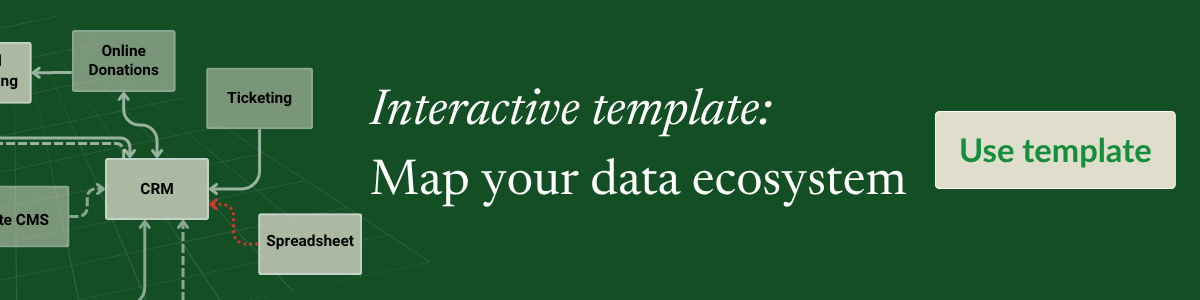
What to do about it. Start by listing every tool that touches supporter data, including the ones that live outside your CRM, like volunteer management, event registration, donation forms, and the occasional spreadsheet. Next, decide which system is the source of truth for each type of information, and who is responsible for updating the others when something changes. This matters most for anything that lives in more than one place, like membership benefits or program descriptions that appear in your ticketing system, on your website, and in your donor database. Then look at how your tools can share data automatically. Integrations come in several forms, from scheduled imports to webhooks and APIs, each with trade-offs, and the right fit depends on your tools and your team.
If you're not sure where to begin, our free data mapping template walks you through documenting every platform that captures data from your visitors, donors, and volunteers, and how those platforms connect. You end up with a clear picture of how data moves through your organization and a shareable map for your leadership and colleagues.
Mistake 5: Changing how you enter data without documenting it
Here is a story most database managers will recognize. You're asked to run a board give/get report covering the last five years. The dates and criteria are right, but the report only returns the last two years of data.
The likely cause is that the way data was entered changed at some point, and the report only recognizes the newer method. If you haven't been at the organization for five years, you may not know how things used to be done, so the first step is to dig into the database and find out. Once you have the report you need, update your written procedures to reflect both the past and current practice, so you don't have to rediscover it next year and the next person has a trail to follow. You may also want to make the data consistent so future reports run the same way. That's a judgment call, since it has to be weighed against your other cleanup projects.
What to do about it. Document every change in how you enter data, and train your team on the why as well as the how. When people know what they're supposed to do and why, they are far more likely to get it right. When they don't, they do their best and sometimes make something up.
Good data is a habit, not a cleanup project
Removing bad data is like getting the dirt out of your house. It keeps creeping back in, which is why the answer is habits rather than a single big cleanup. With a little time put in up front to build good habits, you can save your organization hours of time, and potentially hundreds of donor relationships.
Want the full conversation?
Watch the full webinar recording for more stories, the year-end preparation checklist, and the Q&A with Christine and Lasserina.